



NTR1 Agonist
-
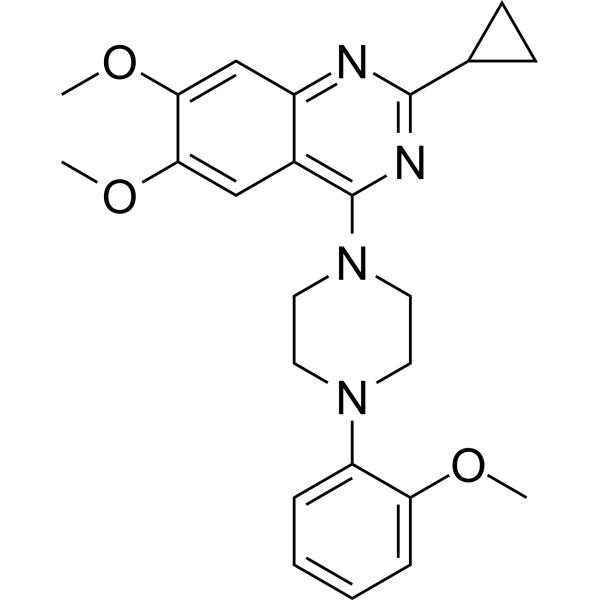
ML314
 0 Images
ML314 is a potent, BBB-penetrant and β-arrestin biased molecule agonist of NTR1 (EC50 = 1.9 μM). ML314 shows good selectivity against NTR2 and GPR35, but does not stimulate Ca2+ mobilization. ML314 can attenuate amphetamine-like hyperlocomotion in dopamine transporter knockout mice. ML314 attenuates methamphetamine-associated hyperlocomotion and potentiates the psychostimulant inhibitory effects of a ghrelin antagonist in wild type mouse model. ML314 also acts as an allosteric enhancer of endogenous neurotensin. ML314 antagonizes G protein signaling. ML314 can be studied in research for methamphetamine abuse conditions.
-
Fmoc-DL-Leu-OH
 0 Images
Fmoc-DL-Leu-OH acts as a partial agonist of the neurotensin NTS1 receptor (NTS1R) with an EC50 of 215.50 μM. Fmoc-DL-Leu-OH triggers intracellular calcium mobilization, and its activity is blocked by selective NTS1R antagonists. Fmoc-DL-Leu-OH can be used in the research of schizophrenia.
-
SR-12062
 0 ImagesCat. No.: HY-182551CAS No.: 1623019-77-1
SR-12062 is a Neurotensin receptor 1 (NTSR1) full agonist that modulates NTSR1 to trigger intracellular Ca2+ mobilization. SR-12062 can be used for the research of schizophrenia, parkinson’s disease, drug addiction.
-
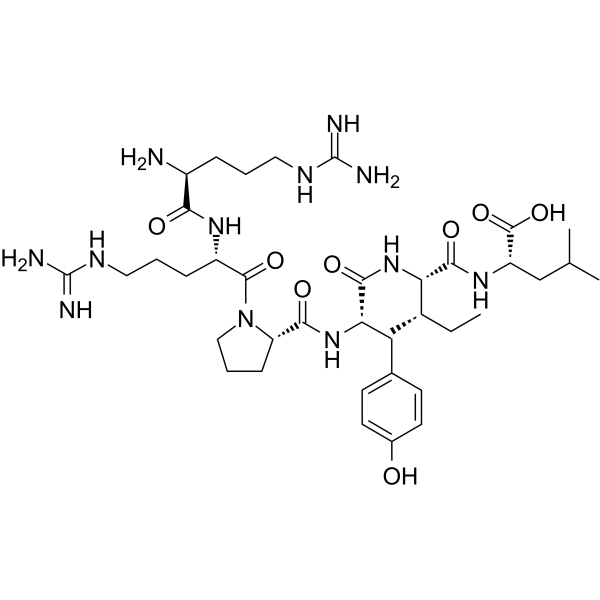
(D-Tyr11)-Neurotensin
 0 ImagesCat. No.: HY-P0234ACAS No.: 64088-62-6
(D-Tyr11)-Neurotensin is an agonist of neurotensin receptor (Neurotensin Receptor) and an inhibitor of glutamatergic neurotransmission. Activation of NTR1 in the VTA by (D-Tyr11)-Neurotensin enhances glutamatergic inputs to non-dopaminergic neurons, mediating reward and dopamine efflux; meanwhile, activation of NTR2 reduces glutamatergic excitatory postsynaptic currents (EPSC) in dopaminergic neurons. (D-Tyr11)-Neurotensin can be used in studies related to schizophrenia.



